

Virtual gambling is developing rapidly – platforms are launched almost daily, interfaces are simplified to a single touch, and bonuses are becoming more sophisticated. At the same time, one indicator remains key regardless of the external shell – online casino licensing. This characteristic determines not only the legal purity of the platform, but also what rights the user will receive, how fairly the gaming mechanism operates, and how financial accounting is conducted. Without a license, any promise becomes an empty sound, and every win becomes a double bet on luck.
Jurisdiction of Licensing and Its Impact on Player Protection
A casino can obtain a license in dozens of jurisdictions, but there are not so many truly safe options. Regulators in Malta, the UK, Canada, and the Isle of Man require operators to fully comply with regulations – from keeping clients’ funds in separate accounts to verifying users through a multi-stage KYC system. For example, with an MGA license, a casino must disclose ownership structure, specify the exact legal entity, and undergo regular audits. A player registered in such a casino can file a complaint directly to the supervisory authority and receive compensation if the operator violates the rules.

Casinos operating under weak jurisdictions, such as Antigua and Barbuda, provide a minimal level of transparency. User complaints are not considered, and regulators do not intervene in conflicts. The choice of jurisdiction in online casino licensing determines not only legality but also the actual level of responsibility towards players.
License Verification: What to Pay Attention to Before Registering
A player interested in long-term and secure gaming should verify the license not just formally, but systematically. The mere presence of a license number in the website footer is not a guarantee of its validity. The platform may have copied someone else’s information or indicated an inactive document. In practice, checking online casino licensing involves visiting the official regulator’s website, where a list of licensees is published. An active license always contains the current legal entity name, registration date, status (active/expired), and a list of domains where services are allowed.
The type of license is also important: B2C provides the right to interact with end customers, while B2B only allows interaction with partners and providers. A casino without B2C status has no legal right to offer games directly to the player. Ignoring this detail deprives the user of any protection in case of fund withdrawal refusal or account blocking.
Auditing Platforms and RNG
Online casino licensing requires operators to use certified Random Number Generators (RNG). This algorithm is the heart of all automated games: roulette, slots, card simulations. Without independent control, a casino can easily “tilt” the odds in its favor. Regulators issue a license only after a technical audit of the software, including checking RTP (Return to Player) and variability of prize distribution.
Major laboratories such as iTech Labs, BMM Testlabs, and eCOGRA conduct comprehensive evaluations, including simulating tens of thousands of rounds. This data is compared with the theoretical model and made publicly available. The absence of such a report is a sign that the license is either absent or formal. In this case, the player cannot verify the fairness of the game and does not receive evidence of the fairness of the processes.
Real Practice of Regulating Online Casinos: How Licensing Resolves Conflicts
Holding a license not only provides a technical and financial foundation but also full legal protection. If a player encounters unfair withholding of funds, forced bonuses, or unauthorized account blocking, the regulator offers a full appeals process. For example, the UK Gambling Commission requires the operator to provide a written response to the client’s claim within 21 days. If there is no response, an official investigation begins with sanctions, including fines and license revocation.
The Maltese regulator (MGA) employs an independent third-party dispute resolution system. A player submits a complaint through an electronic form, and an arbitrator unrelated to the platform reviews the case. Following the investigation, the casino must comply with the decision; otherwise, the regulator suspends the license.
Financial Transparency: How Fund Movements are Regulated
The supervisory authority requires the licensee to separate client and operational accounts. Player funds are kept separately and not used for marketing, salary payments, or covering expenses. In case of bankruptcy, such deposits are subject to refund. A casino without a license mixes financial flows, and in case of problems, a player cannot recover the money even through legal means.
Regulators control the withdrawal speed, the presence of client documents, and the transparency of currency conversion. When licensing an online casino, the operator must use licensed payment gateways and refrain from collaborating with shadowy structures. The player gains confidence that funds will not disappear, and the payment history is securely encrypted.
Control Infrastructure
List of key mechanisms for licensing online casinos:
KYC identity verification – a mandatory procedure before the first fund withdrawal, including passport photos and address confirmation.
RNG Audit – independent verification of random number generation algorithms and RTP ratios.
Account Separation – protection of user funds from platform operational risks.
Dispute Arbitration – mechanism for filing complaints and appealing platform decisions through the regulator.
Bonus Control – verification of promotion terms, protection against rule manipulation.
Legal Access to Software – licensed SDK from developers, prevention of game cloning.
Transaction Monitoring – tracking fund movements, compliance with AML/CTF norms.
Compliance Confirmation – annual certification and license validity confirmation.

Each of these elements enhances security, eliminates result manipulation, and protects against fraud – this is the level at which online casino licensing operates as real player interest protection.
Why It’s Important for Players to Understand Online Casino Licensing
Technological advancements, market growth, and aggressive platform marketing cannot replace the basic requirement – having a license. Without it, the platform remains a lawless territory where the right is always on the side of the owner. Online casino licensing is not a formality but a structural foundation: it regulates every detail – from data storage to betting logic. A player capable of recognizing signs of real regulation not only gets fair play but also the ability to protect their interests in any situation.






 RTP (Return to Player) represents the percentage of bets that are returned to the player in the form of winnings over the long term. The higher the percentage, the greater the chance of rescuing the bank and achieving a sustainable result. The standard range is between 94% and 97.5%. Slots with an RTP lower than 94% ensure faster account balance resets. The optimal value for sensible play is 96%.

 Success in gambling doesn’t start with the bet itself, but with the right choice. With an expert approach, you can minimize risk, save money, and increase your chances of winning. How to choose a slot machine to play for money: Look for a high RTP, medium volatility, fair gameplay, and a user-friendly interface. The selection strategy leads to results with a systematic approach: testing, analyzing, and adjusting.
 Money is becoming the most important indicator of reliability. Reliable online casinos apply transparent limits, use authorized payment gateways, and process withdrawals according to established rules. Regulatory bodies monitor the operator’s work: violations of the established payment speed risk account suspension. If the bank is not verified, your driver’s license is revoked. The operator is obligated to publish payment terms, commission terms, currency, and payment terms.
 The online gambling market has developed into a competitive environment where profits are not achieved through flashy banners, but through a fair infrastructure. Only a license guarantees players stability, legality, and genuine protection. The advantages of licensed online casinos set a new standard: transparency, reliability, and security. The player not only gains access to the title but also confidence in every action on the platform. Legal operators are the standard that will shape the future of the entire gaming entertainment market.
 Online casino rewards are divided into two large groups based on the type of investment: those with a mandatory deposit and those without.
 Types of bonuses in online casinos allow you to gain a starting advantage, build a game strategy, reduce risks, and expand your opportunities. With the right approach, rewards become a tool rather than a trap. Knowledge of the mechanics, attention to the conditions, and moderate activity not only generate interest but also lead to real income.
 Protection against casino fraud begins with analyzing transaction data. The casino is required to store transaction history and utilize anti-fraud mechanisms such as behavioral analysis and IP address tracking. Major platforms use behavioral algorithms from Sift and ThreatMetrix.
 How can you avoid making mistakes when choosing a casino? A systematic approach helps: analyzing licenses, reputation, reviews, providers, and bonus policies. Platforms with clear payment mechanisms, transparent support, and transparent licensing deserve trust. Only in this way are users protected, benefit from the advantages, and minimize the risks.
 Kerry Packer employed aggressive strategies at the blackjack tables. The main calculation was based on card counting and maximum bets. According to various sources, the total winnings ranged from $20 to $40 million, but the game mechanics were always the same: high volatility, precise calculations, and a large capital base. A team of analysts and personal advisors provided precise data on limits, trading behavior, and drop statistics. This preparation reduced the element of chance and transformed the process into one based on probability control.
 The biggest casino wins result from the combination of probability, intuition, and discipline. These events continue to inspire analysts, developers, and enthusiasts and form a cultural foundation. Despite the randomness, each data set illustrates a possible scenario in which the right move could lead to eight-figure results.
 Starting tactics and strategies allow you to quickly test the behavior of an online casino for real money. They are used in roulette, card games and slot machines. The basis is fixed betting patterns and reactions to the outcome. The most famous schemes:
 The gaming system requires discipline, analysis and sober calculation. Through casino tactics and strategies, gambling becomes a pattern. You win when you play by the rules. A defeat occurs when someone gets hurt. Psychological control, a mathematical approach, a good risk assessment and a suitable game choice form the basis for achieving sustainable results. The casino is not the enemy. It is a tool to follow a plan or absorb impulsiveness.
 Each option works according to the same formula, but with nuances. The most common versions of the game:
 Video poker is not just a game of chance, but an algorithmic system where success is achieved not by luck, but by discipline and strategy. A long-term advantage comes from a thorough understanding of winning combinations, a competent card-dealing strategy, a well-considered choice of slot machines, and knowledge of payout tables.
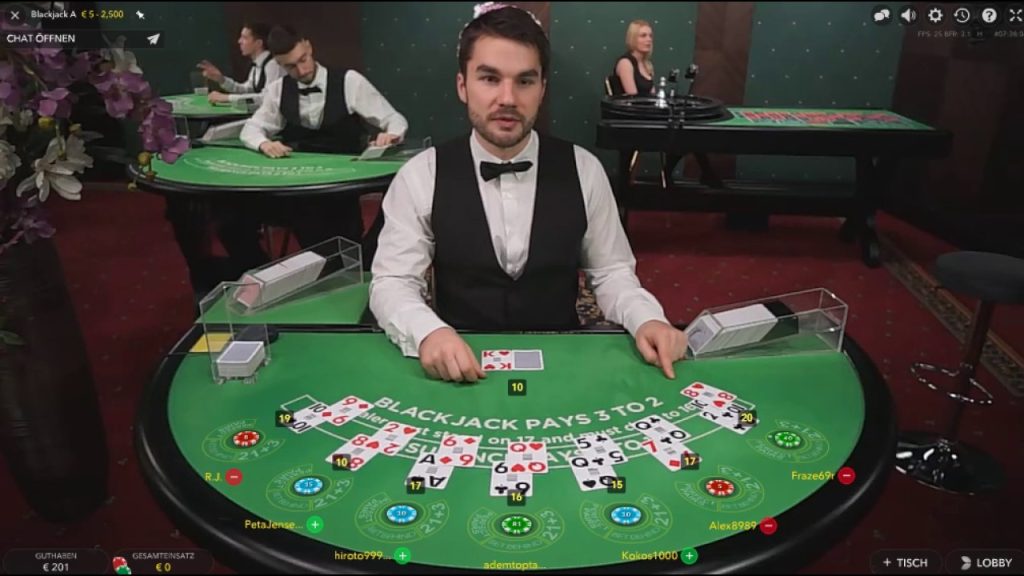 The most common scheme is the basic option. It is based on the probabilities of winning in various gaming situations. Standard action tables take into account the professional’s score and the dealer’s open card. By using this tactic, the casino’s advantage can be minimized to 0.5% if played correctly.
 Effective application of blackjack strategies requires discipline, knowledge of the basic rules, and the ability to adapt to the situation. A user who calculates moves, applies mathematical schemes, and avoids emotional decisions can significantly reduce the casino’s advantage. “Twenty-one” is a game of calculation rather than chance, and a systematic approach always leads to better results.
 Slot themes are no longer limited to fruits and gems. Unique online slots allow you to immerse yourself in worlds that arise at the intersection of different genres. Historical adventures give way to fantastic legends, and classical mysticism gives way to futuristic experiments. Each game is thought out down to the smallest detail: the background, music and visual effects create a complete atmosphere. Some projects surprise with their deep story: original slots turn every spin into a branching storyline in which the player takes part in the events and influences the outcome of the mission.
 The market is developing at a rapid pace, and the most unusual slots set the bar particularly high in terms of quality. Developers create not only slots, but also multimedia products with well-thought-out structures and exciting mechanisms. The titles repeatedly break stereotypes and prove that they can always surprise. Players are increasingly choosing projects with deep storylines, innovative bonuses and spectacular visual effects, which is changing the perception of gaming in general. This trend is creating a new generation of content that can surprise and captivate not only newcomers, but also experienced users.